

Student presentation practice should help learners explain ideas to an audience, not merely repeat a written script. A strong slide deck and complete notes can support a presentation, but they do not guarantee clear delivery, useful pacing, audience awareness, or readiness for questions. Those abilities develop when students rehearse the actual speaking task and improve it through feedback.
The goal is not a flawless performance or one approved style. It is prepared thinking. Students should know their purpose, understand the structure, choose evidence, notice the audience, and recover when the presentation does not unfold exactly as planned.
What is effective presentation practice?
Effective presentation practice is a structured rehearsal of the decisions a student will make while presenting. The learner explains the main idea aloud, moves between sections, uses visuals as support, and responds to likely questions. After feedback, the student repeats part or all of the presentation with a specific improvement in mind.
Practice should resemble the real task enough to reveal readiness. Silent reading may catch wording problems, but it does not show whether the explanation fits the available time. Editing slides can improve visual order, but it does not show whether the speaker can connect the visuals into a coherent story.
A useful rehearsal can be short. Students might practice only the opening, one difficult explanation, and the transition to questions. The important part is that they speak, notice what happens, and try again.
Why reading notes is not the same as presenting
Written and spoken communication work differently. Readers control their pace and can reread a sentence. Listeners must follow the speaker in real time. A paragraph that looks clear on the page may be too dense when heard once.
When students rely on complete notes, attention often narrows to remembering the next line. They may miss audience reactions, rush transitions, or treat questions as interruptions. Memorization can create a similar problem because one forgotten phrase may make the whole sequence feel unstable.
Presentation readiness comes from understanding the structure deeply enough to express it in more than one way. Students can prepare key points, evidence, examples, and transitions while leaving room to respond naturally. This ability supports later interviews, workplace explanations, and leadership situations. The article on skills for the next decade explains why communication remains valuable across changing careers.
What students should rehearse
The opening: State the topic, purpose, and reason the audience should care. The opening should orient listeners, not summarize every detail.
The main line of thought: Organize a small number of claims or sections in an order the audience can follow.
Evidence and examples: Explain why each fact, quotation, result, or visual matters. Do not assume the audience will make the connection alone.
Transitions: Signal when the presentation moves to a new point and how that point connects to the previous one.
Visual use: Refer to the part of the slide, object, chart, or demonstration that supports the explanation. Avoid narrating every visible word.
Pacing and pauses: Allow important ideas to land. A deliberate pause can help both the speaker and the audience.
The close: Return to the central message, show what the evidence supports, and leave the audience with a clear conclusion or next question.
Questions: Listen fully, clarify if necessary, answer directly, and acknowledge when further research is needed.

How to build a repeatable presentation practice cycle
A simple cycle helps students move from preparation to improvement without turning rehearsal into another large assignment.
1. Define the audience and purpose: Who is listening, what do they already know, and what should they understand by the end?
2. Build a speaking outline: Use short prompts for the main idea, evidence, transitions, and conclusion instead of writing every sentence.
3. Rehearse one difficult section: Start with the explanation most likely to become vague, technical, or rushed.
4. Review a few criteria: Check accuracy, structure, audience clarity, and use of evidence.
5. Repeat immediately: Apply one content improvement and one delivery improvement while the feedback is fresh.
6. Run the complete presentation: Test timing, flow, visuals, and the transition into questions.
7. Reflect briefly: Note what became more effective and what still needs attention.
This cycle can use a peer, teacher, counselor, recording, or AI practice partner. The tool matters less than the quality of the prompt and the opportunity to act on feedback.
How to prepare for audience questions
Question time changes a presentation from delivery into conversation. It reveals whether the student can use the material rather than only repeat it. Students should practice likely questions, but they also need strategies for questions they did not predict.
Listen before answering: Do not start building the response so early that the end of the question is missed.
Clarify the focus: Ask whether the question concerns the method, evidence, implication, or recommendation.
Answer first: Begin with the direct response, then add support. This prevents a long explanation from hiding the point.
Connect to evidence: Refer to the project, source, result, or reasoning that supports the answer.
Acknowledge limits: It is acceptable to identify what the project did not examine or what the student would investigate next.
These are also skills for disagreement. The guide to disagreeing without damaging relationships can help students prepare for questions that challenge their assumptions.
How feedback should balance clarity and individual style
Presentation feedback should improve communication without forcing every student into the same performance style. A quiet, deliberate speaker can be effective. A student who communicates with an accent can be clear. Eye contact, gesture, and movement may look different across cultures, disabilities, settings, and presentation formats.
Start with whether the audience can follow the idea. Is the central message clear? Are important claims supported? Do transitions make sense? Does the speaker respond to questions? Delivery observations should support these goals rather than become a checklist of appearance.
Feedback should also distinguish content from delivery. A confident tone cannot correct an inaccurate claim. A hesitant delivery does not erase strong reasoning. Separate categories help students see what they know and how effectively they are communicating it.
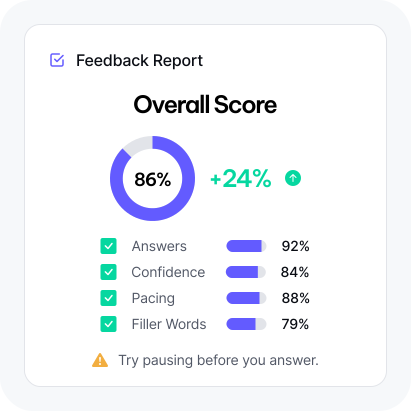
When automated feedback is used, educators should review what the system measures and what it may miss. Pace and filler-word counts can prompt reflection, but they do not capture the full quality of an explanation. Students should understand that a metric is one signal, not a verdict.
How teachers can assess growth without over-grading
Not every rehearsal needs a detailed grade. Frequent formative practice is easier to sustain when students receive a small amount of useful information and take responsibility for the next step.
Teachers can select three or four criteria that match the assignment, such as accurate content, clear organization, useful evidence, and response to questions. Students can self-review a practice attempt, identify one example, and note the change they will make. Peer feedback can use the same criteria and focus on what was understandable and where the listener needed more context.
Technology can help surface patterns across a class, but educators should review samples and remain responsible for final evaluation. A dashboard may show which students completed practice or where pacing changed. It cannot fully judge insight, originality, disciplinary accuracy, or the meaning of a student's choices.
The article on building a development plan that sticks offers a useful principle for students: small goals, visible actions, and reflection are more sustainable than a vague intention to improve.
Frequently asked questions
How many times should a student rehearse a presentation?
Enough to test the difficult sections, complete one full timed run, and apply feedback. Rehearsing the same script many times is less useful than a few purposeful attempts with clear changes.
Should students memorize their presentations?
Usually, no. Memorize essential facts, quotations, or exact definitions when necessary, but understand the structure and ideas well enough to explain them naturally.
Are filler words always a problem?
No. Occasional filler words are normal. They matter when they make the message difficult to follow or signal that the student needs a better pause or clearer structure.
Can students practice without recording video?
Yes. They can use audio, a live partner, a transcript, a private conversation tool, or teacher observation. The format should match the learning goal and respect accessibility and privacy.
What should a student do when they do not know an answer?
Acknowledge the limit honestly, share what is known, and explain how the missing information could be found. Inventing certainty is less effective than demonstrating thoughtful judgment.
The goal is prepared thinking, not a memorized performance
Presentation practice is most valuable when it prepares students to communicate ideas, not simply reproduce sentences. Rehearsing structure, explanation, visuals, questions, and recovery builds a flexible form of readiness that transfers beyond one assignment.
Students do not need to become identical speakers. They need enough preparation to make their thinking understandable to an audience. A focused practice cycle gives them a safe way to discover what works before presentation day.