
Separate communication skill from communication style
Use predictability to reduce uncertainty
Offer meaningful choice and control
Practice self-advocacy and help-seeking conversations
Interpret automated feedback carefully
Avoid forced exposure and excessive repetition
Measure access, agency, and useful transfer
A four-week Resso implementation sequence
Accessible practice expands options instead of enforcing sameness
Resso can offer anxious and neurodivergent students a lower-risk way to rehearse classroom, school, and career conversations when it is implemented with choice, predictable structure, accommodations, and clear limits. The purpose is not to make students appear neurotypical or remove every sign of anxiety. It is to reduce avoidable uncertainty and help each learner communicate goals, knowledge, boundaries, and support needs in a way that works for them.
A practice tool is not therapy, diagnosis, or a substitute for an individualized education plan, accommodation process, counselor, psychologist, speech-language professional, or trusted adult. Resso's education practice environment should support established plans and student agency rather than create a new compliance requirement.
Separate communication skill from communication style
A student can communicate accurately without making sustained eye contact, speaking quickly, using typical facial expressions, or eliminating movement. Evaluation should focus on whether the message is understandable, relevant, safe, and responsive to the task. Style differences are not automatically deficits.
Before using Resso, define which behaviors genuinely matter. Asking for clarification may matter in a lab. Stating a boundary may matter in a peer conversation. Explaining evidence may matter in class. Vague goals such as 'sound normal' or 'look confident' are inappropriate and unlikely to support learning.
Use predictability to reduce uncertainty
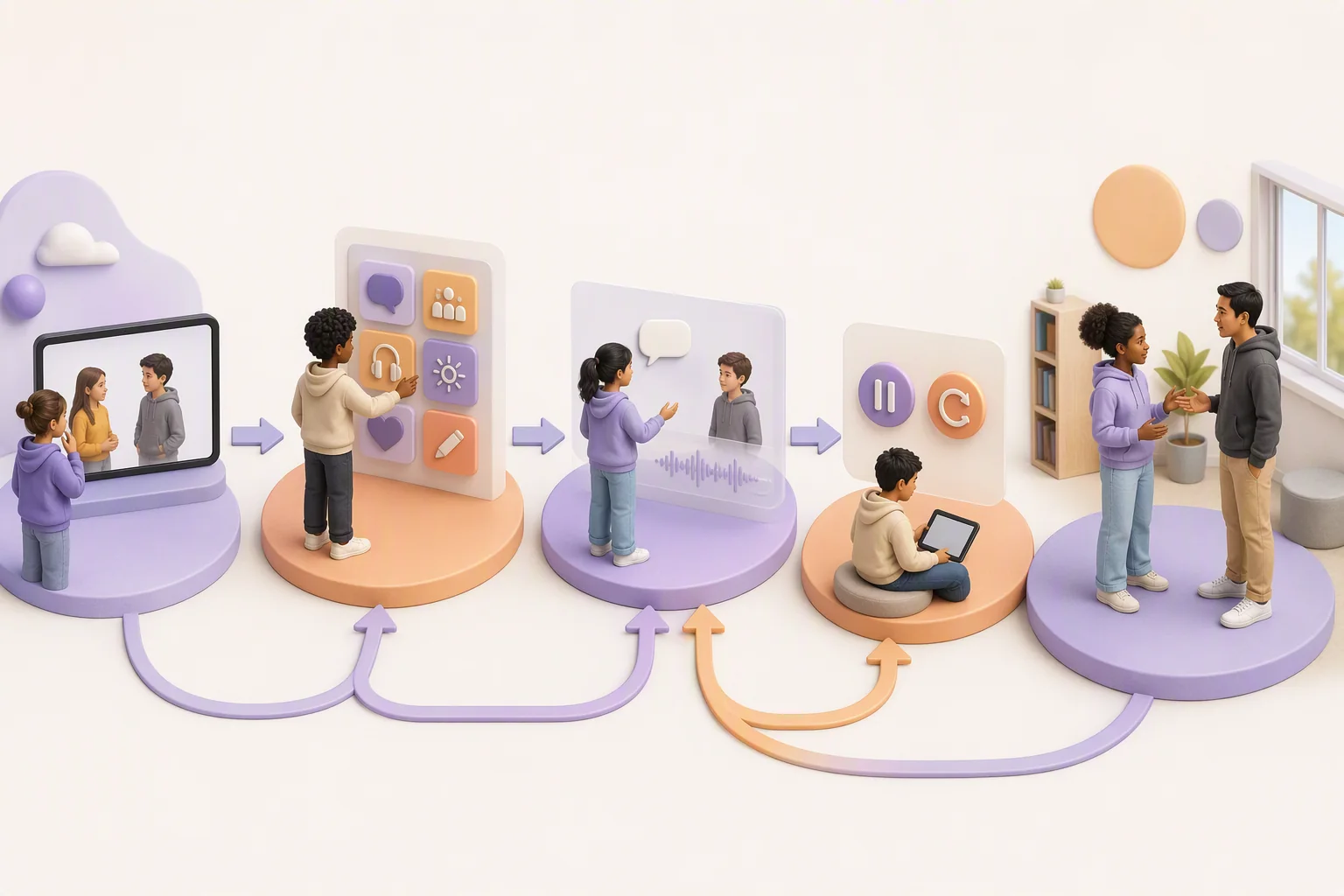
Preview the purpose, length, likely question types, feedback categories, and what data will be available to the educator. Let students see a sample prompt and decide when to begin. Predictability can free attention for the communication task instead of making the learner decode the activity while performing it.
Use Resso's custom scenario builder to control the role, tone, and challenge. Start with a supportive partner and one question at a time. Increase complexity only when it serves the student's goal and the learner understands the change.
Offer meaningful choice and control
Students may choose a shorter session, a familiar topic, captions, planning notes, a seated or standing position, or a different time of day. They should know how to pause and stop. These choices are not rewards for tolerating distress. They are design features that make practice accessible.
Provide a non-AI alternative when required or appropriate. A student might rehearse with an educator, use an audio-only format, submit a recorded response, or demonstrate the same outcome through supported communication. Resso is one route to practice, not the definition of participation.
Practice self-advocacy and help-seeking conversations
Useful scenarios include asking a teacher to clarify instructions, requesting a quieter setting, explaining a processing need, telling a teammate that roles are unclear, or preparing for an accommodation meeting. The student should decide what they want to disclose and what outcome they need.
The broader article on speaking up about support and well-being can inform older students, but school scenarios must be developmentally appropriate. Educators should never pressure a learner to reveal a diagnosis or personal history during practice.
Interpret automated feedback carefully
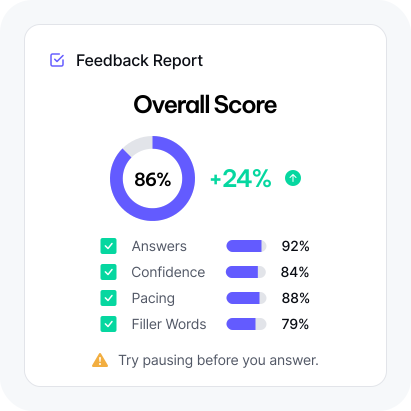
Automated measures may misread pauses, prosody, gaze, word choice, or nonstandard interaction patterns. Do not turn those signals into judgments about effort, honesty, employability, respect, or readiness. Review only the feedback connected to the agreed learning goal.
Invite the student to say whether the feedback fits their experience. If it does, choose one manageable strategy and try again. If it does not, document the mismatch and adjust the criteria or scenario. The learner's interpretation is important evidence, especially when the system rewards a style that is not necessary for success.
Avoid forced exposure and excessive repetition
Repetition can build familiarity, but it can also increase fatigue or distress. More attempts are not always better. Set a brief purpose, stop after a useful change, and avoid escalating the scenario simply to test whether the student can tolerate discomfort.
When anxiety is severe, persistent, or connected to safety, use appropriate professional and school supports. Resso can rehearse a coping or help-seeking conversation only within a plan developed by qualified adults. It should never be presented as treatment.
Measure access, agency, and useful transfer
Ask whether the student understood the task, could control the session, used an agreed strategy, and felt the practice prepared them for a real conversation. Compare clarity or task completion across attempts without demanding conformity to a standard persona.
At the program level, review opt-out patterns, accommodation use, feedback mismatches, and who benefits. Include students and families in evaluation where appropriate. A successful implementation expands options and self-advocacy; it does not simply increase the number of completed simulations.
A four-week Resso implementation sequence
Week 1: define the outcome and collect a baseline. Select one near-term goal: communicating a need, boundary, question, or contribution using the student's chosen supports. Explain the purpose to learners, show the criteria, confirm privacy and accessibility arrangements, and let each participant complete one short attempt before receiving extensive coaching. The baseline is not a grade or a prediction. It gives the learner and educator a concrete starting point and reveals whether the scenario, instructions, device access, and level of challenge are working as intended.
Week 2: teach, practice, and choose one change. Provide the knowledge, examples, vocabulary, or professional framework students need before asking them to perform. Learners then complete a Resso scenario, review feedback, and select one observable improvement that matters to the audience. They repeat only the relevant moment while it is fresh. This focused retry helps students experience cause and effect instead of treating the feedback report as a final judgment about their ability.
Week 3: vary the context and add human interpretation. Change one feature, such as the question, audience, constraint, or level of follow-up, while keeping the core skill stable. Ask the student and an educator or support professional who understands the existing plan to review a sample, moderate the criteria, and identify feedback that needs context. Students should explain which suggestion they accepted, which they questioned, and what evidence supports that choice. The purpose is adaptable judgment, not compliance with every automated signal.
Week 4: transfer the skill into an authentic setting. Use a real classroom, school-support, or transition conversation selected with the learner as the next test. Collect only the evidence needed to answer whether practice helped, including greater agency, less avoidable uncertainty, and useful transfer without forced conformity. Invite students to describe what transferred and what remained difficult. A real setting may expose timing, relationship, access, or content issues that a simulation could not reproduce, so treat transfer evidence as guidance for the next design cycle rather than a verdict on the learner.
After the pilot, keep the scenario only if it adds value beyond existing instruction. Review participation and outcomes by learner group, document accommodations and missing data, and check that students reached human support when needed. Revise one element at a time, record the reason, and set a future review date. This small, transparent cycle produces a more credible implementation than launching many scenarios without knowing which conditions helped students improve.
Frequently asked questions
Is Resso a treatment for anxiety?
No. It is a practice tool. Mental-health care and therapeutic exposure require qualified professionals and an appropriate plan.
Should eye contact be scored?
Not as a universal requirement. Focus on the actual communication goal and respect disability, culture, context, and individual style.
Can a student opt out?
Schools should follow policy and provide an accessible alternative when required or appropriate. Students also need control over session length and difficulty.
Can students disclose accommodations in a scenario?
They can practice self-advocacy using only information they choose and are permitted to share. Never require unnecessary diagnostic details.
Accessible practice expands options instead of enforcing sameness
Resso can reduce uncertainty and make rehearsal more available for students who benefit from predictable, private practice. Its value comes from allowing a learner to prepare, pause, repeat, and carry a chosen strategy into a real interaction.
The implementation succeeds when students gain agency and usable communication, not when they become more alike. Choice, accommodations, human judgment, and respect for different styles must remain central.