
Postsecondary planning is also a conversation skill
Build scenarios for multiple postsecondary pathways
Help students ask questions that change a decision
Practice family conversations about priorities and constraints
Prepare students for high-stakes requests and interviews
Integrate Resso before and after counselor meetings
Measure planning readiness without ranking life choices
School counselors can use Resso to help students rehearse the conversations surrounding postsecondary choices: asking a college or training provider questions, explaining priorities to family, requesting a reference, discussing financial constraints, and preparing for admissions, apprenticeship, scholarship, or employment interviews. The practice can extend limited counseling time without replacing the counselor's expertise.
Postsecondary planning is not one pathway and should not be framed as a performance of certainty. Resso's education practice environment can help students articulate what they know and what they still need to investigate, while counselors provide accurate information, equity-aware guidance, and support for decisions with real financial and personal consequences.
Postsecondary planning is also a conversation skill
Students make better use of advising, campus visits, employer events, and family discussions when they can name their interests, constraints, questions, and trade-offs. A student who cannot yet explain those priorities may leave an important conversation with more information but no clearer decision.
Practice gives learners a structure: describe the current goal, identify what matters, ask for missing information, compare options, and name the next action. The goal is not a final answer in one session. It is a student who can participate more actively in an ongoing planning process.
Build scenarios for multiple postsecondary pathways
Include university, college, apprenticeship, certificate, military where relevant, gap-year service, entrepreneurship, and direct-to-work routes based on local context. Avoid presenting one route as the default sign of success. Each scenario should help the student investigate fit, cost, supports, requirements, and likely next steps.
Resso's custom scenario builder can simulate an admissions representative, apprenticeship coordinator, employer, financial-aid office, or family member. Counselors should verify factual guidance separately and keep changing deadlines, eligibility rules, and financial information outside the AI's authority.
Help students ask questions that change a decision
A useful question connects to a choice. Instead of asking whether a campus has supports, a student might ask how tutoring is accessed, whether it costs extra, and what happens during a busy term. For a training program, they might ask how placements are assigned, what equipment is required, and which credentials graduates earn.
During practice, ask the digital representative to give a general answer so the student must request detail. This teaches follow-up rather than passive information collection. Students can then carry a short question set into real visits and advising appointments.

Practice family conversations about priorities and constraints
Families may hold different views about cost, distance, status, safety, timing, or field of study. A student can practice acknowledging those concerns, explaining their evidence, asking what is negotiable, and identifying where more information is needed. The scenario should not cast family members as obstacles by default.
For guidance on handling disagreement, counselors can connect practice with respectful conflict-resolution strategies. Real family dynamics can be sensitive, so use fictional or generalized details and move active conflict or safety concerns to qualified human support.
Prepare students for high-stakes requests and interviews
Students may need to request a reference, explain an accommodation, ask about financial aid, complete an admissions interview, or discuss an apprenticeship opportunity. Each requires a clear purpose, truthful context, and an appropriate next step. Resso can provide several attempts without consuming an entire counseling appointment.
Counselors should help students prepare the substance first. Practice can organize experience and improve delivery, but it must not invent achievements or substitute generic AI advice for program-specific requirements. When a decision affects money, immigration status, accommodations, or eligibility, direct the student to the authorized office.
Integrate Resso before and after counselor meetings
Before a meeting, students can complete a short scenario and bring three questions plus one uncertainty. The counselor then spends more time interpreting options and less time starting from a blank page. After the meeting, a follow-up scenario can help the learner explain the decision and prepare the next real conversation.
Use common scenarios for scale and individualized prompts when the context requires it. Participation should be optional where policy requires, and alternatives should be available. Counselors need visibility into the learning goal and student reflection without being expected to review every practice recording.
Measure planning readiness without ranking life choices
Track whether students can identify options, ask decision-relevant questions, explain priorities, verify information, and complete next steps. Later indicators might include applications, financial-aid completion, acceptance, enrollment, apprenticeship registration, or employment, but these outcomes are shaped by access and circumstance as well as preparation.
Disaggregate participation and results to identify who is not receiving support. Resso should widen access to practice, not become another gate. A strong evaluation looks for better questions, earlier action, and more informed conversations while respecting that a good postsecondary plan differs from student to student.
A four-week Resso implementation sequence
Week 1: define the outcome and collect a baseline. Select one near-term goal: explaining priorities and asking questions that change a postsecondary decision. Explain the purpose to learners, show the criteria, confirm privacy and accessibility arrangements, and let each participant complete one short attempt before receiving extensive coaching. The baseline is not a grade or a prediction. It gives the learner and educator a concrete starting point and reveals whether the scenario, instructions, device access, and level of challenge are working as intended.
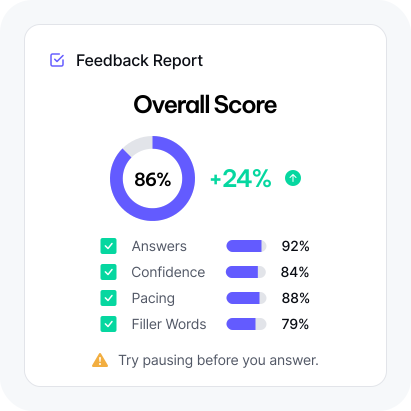
Week 2: teach, practice, and choose one change. Provide the knowledge, examples, vocabulary, or professional framework students need before asking them to perform. Learners then complete a Resso scenario, review feedback, and select one observable improvement that matters to the audience. They repeat only the relevant moment while it is fresh. This focused retry helps students experience cause and effect instead of treating the feedback report as a final judgment about their ability.
Week 3: vary the context and add human interpretation. Change one feature, such as the question, audience, constraint, or level of follow-up, while keeping the core skill stable. Ask a school counselor or qualified pathway advisor to review a sample, moderate the criteria, and identify feedback that needs context. Students should explain which suggestion they accepted, which they questioned, and what evidence supports that choice. The purpose is adaptable judgment, not compliance with every automated signal.
Week 4: transfer the skill into an authentic setting. Use a counseling appointment, campus visit, training-provider meeting, family conversation, or admissions interview as the next test. Collect only the evidence needed to answer whether practice helped, including better questions, verified information, and completion of a concrete next action. Invite students to describe what transferred and what remained difficult. A real setting may expose timing, relationship, access, or content issues that a simulation could not reproduce, so treat transfer evidence as guidance for the next design cycle rather than a verdict on the learner.
After the pilot, keep the scenario only if it adds value beyond existing instruction. Review participation and outcomes by learner group, document accommodations and missing data, and check that students reached human support when needed. Revise one element at a time, record the reason, and set a future review date. This small, transparent cycle produces a more credible implementation than launching many scenarios without knowing which conditions helped students improve.
Frequently asked questions
Can Resso recommend the best college or career path?
It should not make the decision. Students need verified information and qualified human guidance to compare options, constraints, costs, and personal goals.
Can students practice scholarship and admissions interviews?
Yes. Use truthful experiences and realistic questions, then have counselors or educators interpret readiness and verify requirements.
Should students enter financial or immigration details?
No sensitive information should be entered unless institutional policy explicitly permits it. Direct consequential questions to authorized advisors.
How does Resso save counselor time?
Students can rehearse foundational questions and explanations before appointments, allowing limited human time to focus on interpretation, barriers, and decisions.
Better planning starts with better questions
Resso can help students arrive at postsecondary conversations ready to explain what matters, ask for relevant information, and identify the next step. That preparation extends the reach of counseling without replacing the relationship.
The outcome is not certainty or one preferred destination. It is a learner who can investigate choices, communicate constraints, seek help, and take informed action toward a path that fits.