
Technical communication is a core STEM capability
Design scenarios for different technical audiences
Practice design reviews and capstone defenses
Communicate risk, uncertainty, and limitations clearly
Prepare for team, client, and project-management moments
Pair communication feedback with technical review
Measure technical communication through authentic transfer
A four-week Resso implementation sequence
Technical expertise has greater impact when others can use it
Engineering and STEM students can use Resso to practice explaining technical concepts, defending design choices, reporting results, communicating risk, presenting to nontechnical stakeholders, and responding to questions without overstating certainty. Technical communication is not a final layer added after the analysis. It is part of how evidence becomes useful and decisions become accountable.
Resso's education practice environment can create repeatable audiences and follow-up questions, while faculty remain responsible for scientific accuracy, safety, professional standards, and assessment. The strongest scenarios make students reason from verified work rather than reward fluent but unsupported explanations.
Technical communication is a core STEM capability
STEM graduates communicate with teammates, managers, clients, regulators, patients, funders, community members, and the public. Each audience needs a different level of detail, but all require accuracy about evidence, uncertainty, limitations, and consequences.
A learner who can solve a problem on paper may still struggle to explain the method, defend an assumption, or state what the result does not establish. Spoken practice reveals those gaps and encourages students to connect equations, data, design choices, and human decisions.
Design scenarios for different technical audiences
Ask students to explain the same work to a technical peer, a decision-maker, and an affected community member. The facts should remain stable while vocabulary, examples, and emphasis change. This tests audience awareness without encouraging oversimplification or manipulation.
Use Resso's custom scenario builder to define the audience's knowledge, priorities, and likely questions. Faculty should supply the verified technical context and identify any safety-critical statements that must be evaluated by a qualified human.
Practice design reviews and capstone defenses
A design review can ask why a requirement matters, which alternatives were considered, how the evidence supports the choice, what failed during testing, and which risk remains. Students should be able to distinguish a calculation, assumption, judgment, and unresolved question.
Resso can vary follow-ups so the learner does not memorize a panel script. If the answer becomes vague, the student returns to the analysis or documentation. Communication practice should expose weak reasoning early, not create a smoother defense for a decision that still lacks support.
Communicate risk, uncertainty, and limitations clearly
Technical professionals often speak when evidence is incomplete. Students can practice stating what is known, how it was measured, what assumptions were used, which failure modes matter, and what additional information would change the recommendation. False precision is not confidence.
The article on workplace ethics and accountable decisions provides useful context. Programs should connect communication with professional duties to public safety, transparency, environmental impact, and affected communities.
Prepare for team, client, and project-management moments
Useful scenarios include clarifying requirements, reporting a test failure, negotiating scope, explaining a schedule change, asking for resources, responding to a client concern, and documenting a handoff. These interactions determine whether technical work stays coordinated and whether risks surface early.
Students should practice concise updates as well as deep explanations. A two-minute project status and a ten-minute design defense serve different purposes. Resso can test both, helping learners decide what the listener needs now and where supporting detail belongs.
Pair communication feedback with technical review
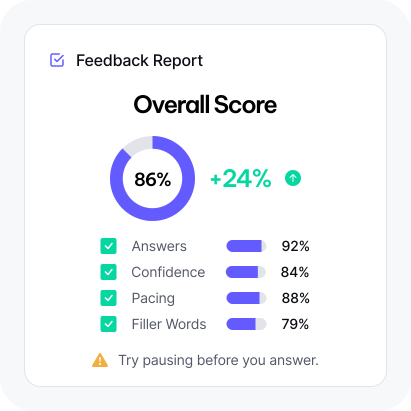
Automated feedback can identify structure, pacing, relevance, and response patterns. Faculty and peers must examine technical accuracy, assumptions, units, evidence, risk statements, and ethical implications. Neither review is sufficient alone.
After feedback, the student should name whether the issue was communication or underlying analysis. If the evidence is missing, revise the work. If the evidence is sound but the explanation obscures it, revise the communication and repeat the relevant section.
Measure technical communication through authentic transfer
Compare attempts on audience adaptation, evidence, clarity, uncertainty, response to questions, and next-step recommendations. Then observe whether the skill transfers into labs, project meetings, capstones, placements, and research presentations. Use multiple reviewers for high-stakes judgments.
Programs can connect growth to course completion, capstone outcomes, work-integrated learning, graduate school interviews, and employment, while acknowledging other causes. Resso's clearest contribution is increasing deliberate practice and making specific communication growth visible before later outcomes are analyzed.
A four-week Resso implementation sequence
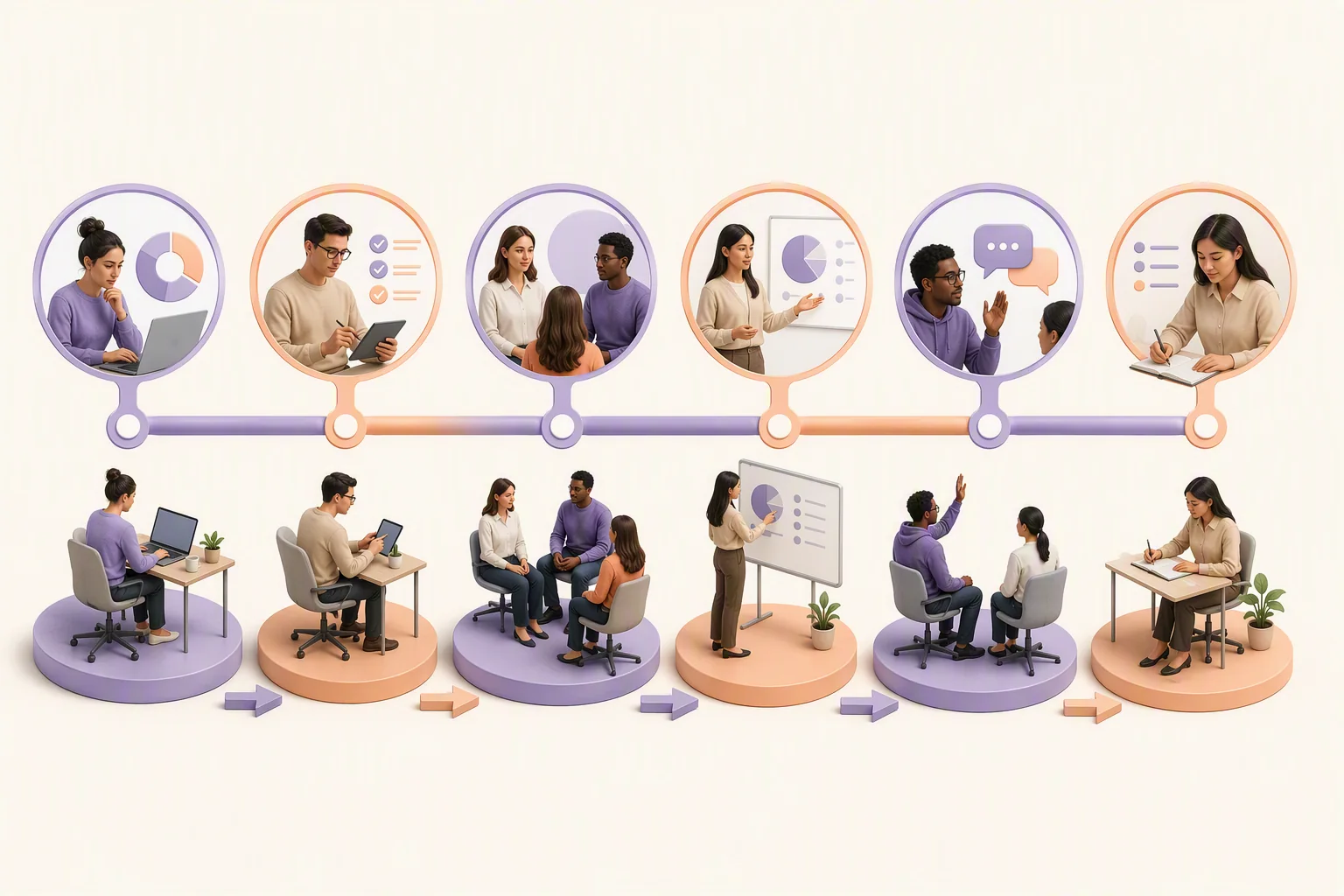
Week 1: define the outcome and collect a baseline. Select one near-term goal: explaining verified technical work, trade-offs, uncertainty, risk, and a recommended next step. Explain the purpose to learners, show the criteria, confirm privacy and accessibility arrangements, and let each participant complete one short attempt before receiving extensive coaching. The baseline is not a grade or a prediction. It gives the learner and educator a concrete starting point and reveals whether the scenario, instructions, device access, and level of challenge are working as intended.
Week 2: teach, practice, and choose one change. Provide the knowledge, examples, vocabulary, or professional framework students need before asking them to perform. Learners then complete a Resso scenario, review feedback, and select one observable improvement that matters to the audience. They repeat only the relevant moment while it is fresh. This focused retry helps students experience cause and effect instead of treating the feedback report as a final judgment about their ability.
Week 3: vary the context and add human interpretation. Change one feature, such as the question, audience, constraint, or level of follow-up, while keeping the core skill stable. Ask qualified STEM faculty and an audience representative to review a sample, moderate the criteria, and identify feedback that needs context. Students should explain which suggestion they accepted, which they questioned, and what evidence supports that choice. The purpose is adaptable judgment, not compliance with every automated signal.
Week 4: transfer the skill into an authentic setting. Use a design review, lab meeting, capstone defense, research presentation, or client briefing as the next test. Collect only the evidence needed to answer whether practice helped, including more accurate audience adaptation, clearer risk communication, and transfer without loss of technical meaning. Invite students to describe what transferred and what remained difficult. A real setting may expose timing, relationship, access, or content issues that a simulation could not reproduce, so treat transfer evidence as guidance for the next design cycle rather than a verdict on the learner.
After the pilot, keep the scenario only if it adds value beyond existing instruction. Review participation and outcomes by learner group, document accommodations and missing data, and check that students reached human support when needed. Revise one element at a time, record the reason, and set a future review date. This small, transparent cycle produces a more credible implementation than launching many scenarios without knowing which conditions helped students improve.
Frequently asked questions
Can Resso verify technical calculations?
Faculty and approved technical tools must verify calculations, evidence, and safety. Resso should be used to rehearse communication around verified work.
Is plain language less rigorous?
No. A precise plain-language explanation can reveal deeper understanding. Students should preserve essential meaning, limits, and uncertainty while adapting detail.
Can students upload confidential research or client data?
Not unless explicitly authorized by institutional policy and agreement. Use synthetic, public, or carefully de-identified material.
What is a good first scenario?
Start with a short project explanation for a nontechnical stakeholder, followed by questions about evidence, trade-offs, and limitations.
Technical expertise has greater impact when others can use it
Resso gives engineering and STEM students a place to test whether their reasoning remains clear when an audience asks why, what could fail, and what should happen next. That pressure can strengthen both explanation and analysis.
The goal is not simplification at any cost. It is accurate, audience-aware communication that preserves evidence, uncertainty, safety, and professional responsibility across the settings where technical decisions matter.