

Understand what the speaking task actually demands
Build a Resso scenario that matches the task
A step-by-step practice workflow for IELTS Speaking Part 2
Review feedback in the right order
A focused 30-minute practice session
Move from coaching toward official conditions
Use the IELTS Speaking Part 2 preparation minute well, organize a complete long turn, and recover when vocabulary or ideas run short.
High-stakes English tests compress several language skills into a short speaking window. You need to understand the task, retrieve useful language, organize meaning, and stay understandable while the clock and recording continue. For IELTS candidates preparing for the individual long turn, progress comes from repeated, specific practice rather than from collecting model answers.
Resso language practice can provide a private place to speak, receive follow-up questions, review feedback, and retry. This guide turns that capability into a workflow for ielts speaking part 2. It keeps official materials and qualified teachers in the loop because an independent practice tool cannot reproduce an official examiner, security process, or score.
Understand what the speaking task actually demands
Part 2 gives you a task card, one minute to prepare, and a longer uninterrupted turn. The card suggests points to include, but a successful response needs an organizing idea, relevant detail, and a clear path beyond simply reading through the bullets.
The preparation minute is a decision-making task. You must select a specific example, order your ideas, and create retrieval cues that remain useful while you speak. Full sentences consume time and tempt you to read rather than communicate.
The long turn also tests recovery. A forgotten word, a weak example, or an early conclusion does not have to end the response. You can define, compare, add sensory detail, explain significance, or reflect on what changed.
Before building a practice routine, open the current official test information and confirm the task names, timing, instructions, scoring information, and permitted materials. Save the date you checked it. This small step prevents an old video or forum post from shaping weeks of practice.
Build a Resso scenario that matches the task
Give Resso a bank of varied long-turn categories: person, place, object, event, decision, skill, and experience. Ask for one fresh task card at a time, one uninterrupted preparation minute, and an uninterrupted response of up to two minutes. Only after the long turn should Resso ask one or two brief connected questions.
Use Resso's custom scenario builder to define the role, context, prompt sequence, and success criteria. Keep prompts original and representative. Do not copy secured questions, imply access to live test content, or let the practice partner explain an answer before you have attempted it.
Before the first response, complete these checks:
- Use blank paper and a pencil instead of a prepared template
- Select one specific example within the first fifteen seconds
- Write five to seven keywords and one closing idea
- Place the timer where it will not become the focus of your attention
A step-by-step practice workflow for IELTS Speaking Part 2
The sequence below is specific to the communication demands of this task. Complete a clean baseline first. Then change one behavior at a time so you can tell which adjustment helped.
Step 1: Choose a concrete example
Specific people, moments, and places generate easier detail than broad categories. Commit early enough to plan, even if the example is not perfect. Changing examples halfway through the minute usually costs more than it helps.
Step 2: Build a speaking route
Create a simple path such as context, sequence, detail, meaning, and reflection. The cue-card bullets are prompts, not a mandatory paragraph order. Group related points so the talk feels coherent.
Step 3: Write retrieval cues only
Note names, verbs, contrasts, numbers, and sensory details. Avoid full sentences. Each note should unlock several spoken phrases rather than become a line you must reproduce exactly.
Step 4: Open without a long preface
Identify the topic and your example in the first few sentences. This buys clarity. Memorized claims about how interesting the topic is often use time without moving the response forward.
Step 5: Extend through significance
If the narrative ends early, explain why the example mattered, compare before and after, describe another person's reaction, or connect it to a wider lesson. These extensions create meaning rather than filler.
Step 6: Finish the current idea
When time is nearly complete, close the sentence you are in and state a brief reflection. Practice staying calm if the examiner stops you at the limit; being stopped is part of the task, not evidence that you failed.
Keep the final attempt on a new prompt. That transfer check matters because a response can sound better simply through familiarity. For a broader routine built around real conversation, see How Students Can Use Resso for Real Conversation Practice in a New Language.
Review feedback in the right order
Evaluate the plan and performance separately. First ask whether the notes created a usable route. Then listen for a clear subject, connected development, precise details, flexible paraphrase, and intelligible delivery. If you ran short, diagnose whether the problem was idea selection, organization, language retrieval, or pacing before choosing the next drill.
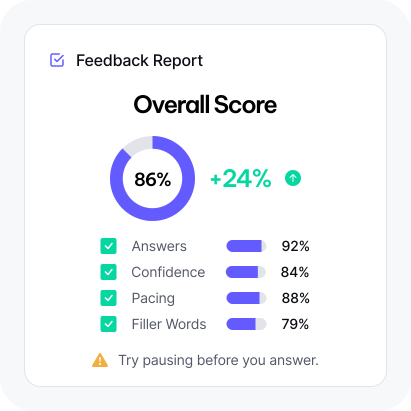
Use Resso feedback to locate a moment, not to replace your whole answer. Write a compact note in this form: evidence, likely cause, next action, transfer prompt. If the suggestion depends on an uncertain transcript, scoring interpretation, or pronunciation judgment, listen again and ask a qualified person. The related guide How to Practice for IELTS Speaking With Resso can help you place this feedback inside the wider test strategy.
A focused 30-minute practice session
A short session works when every block has a purpose. Use this sequence as a starting point, then adjust for access needs, fatigue, and your teacher's guidance:
- Five minutes: choose examples for five cards without speaking
- Ten minutes: plan and deliver two timed long turns
- Eight minutes: redo the weaker response using new notes and fresh wording
- Seven minutes: review where the plan helped or failed and write one rule for the next session
Stop the review after selecting one next action. Endless replay encourages self-criticism without necessarily creating better speech. On another day, use IELTS Speaking Part 3: Develop and Defend Complex Ideas to work on a connected weakness without repeating the same prompt.
Common mistakes to avoid
These habits can make practice feel productive while reducing its value:
- Copying the task-card bullets as a rigid script
- Spending most of the minute finding an impressive story
- Writing sentences that are too detailed to scan
- Speaking quickly to fit more content
- Ending after the factual description without explaining significance
The correction is not to remove personality or speak like a model recording. Keep your own experiences, accent, and reasonable speaking style. Improve whether the listener can follow the meaning and whether the response performs the requested task.
Move from coaching toward official conditions
Early practice can use captions, visible planning cues, replay, and generous preparation. Reduce those supports gradually when the official task does not provide them. Use fresh prompts, the expected recording setup, and realistic interruption rules. Maintain approved accessibility arrangements and follow the provider's current accommodation process.
Resso remains most valuable as the repetition layer around official materials and human coaching. A teacher can interpret recurring language patterns, a test provider defines the format, and an authorized test produces the result. IELTS describes Part 2 as an individual long turn with a task card and preparation time. Check current official instructions before your test because policies and delivery details can change.
Track progress without predicting an official score
Track whether you choose an example promptly, use five to seven readable cues, sustain a connected response, and recover from at least one missing word without stopping. Rotate prompt categories so improvement is not tied to a favorite story.
Compare like with like: similar task family, fresh prompt, similar preparation time, and similar equipment. Keep confidence, language performance, and technical quality in separate columns. If you want a deeper plan for applying feedback across a week, use How to Use Resso Feedback Without Memorizing IELTS Scripts.
Frequently asked questions
Must I cover every bullet on the task card?
Use the prompts to develop the topic, but prioritize a coherent response. Follow current official instructions and teacher guidance on the role of each point.
What if the topic is unfamiliar?
Choose the closest truthful or plausible experience you can explain. Practice making quick, workable choices rather than waiting for the perfect example.
Should I memorize a universal structure?
A light planning route can help, but it must bend to the prompt. Memorized wording and identical stories often reduce relevance and make follow-up questions harder.
Practice the task, then transfer the skill
Effective test preparation develops language you can use when the wording, topic, or follow-up changes. Match the practice design to IELTS Speaking Part 2, complete the response before over-editing it, review evidence in a sensible order, and test every improvement on unfamiliar material.
With Resso for Education, learners and educators can build repeatable speaking scenarios while keeping official rules and human judgment authoritative. Start with one baseline, choose one high-impact change, and build enough varied repetitions for that change to survive the next question. Talk with Resso about language-practice coaching.