
Start with one baseline before you over-prepare
Choose one or two goals per session
Use short drills between full mock interviews
Vary the interviewer, question wording, and format
Measure progress with evidence, not mood alone
Know when another full mock will help
Most candidates benefit from three to six mock interviews before an important interview, with shorter drills between them. The right number depends on experience, anxiety, role complexity, and the time available. One baseline reveals gaps. Focused retries build skill. A final realistic rehearsal tests whether the pieces hold together.
Ten full simulations are not automatically better than three. Repeating the same weaknesses without useful feedback can make them more automatic. Too much practice can also produce fatigue or scripted delivery. Use mock interviews as checkpoints inside a deliberate plan, consistent with the broader approach in building a personal development plan that sticks.
Start with one baseline before you over-prepare
Run a 20- to 30-minute interview with limited notes. Include an opening, two behavioral questions, one role-specific problem, and time for your questions. The baseline should resemble the real format enough to reveal where you lose clarity, evidence, or composure.
Do not judge the session by a single score. Capture specific observations: Which questions took too long to understand? Which examples lacked results? Did you answer the question asked? Where did you recover well? The baseline turns vague nervousness into a small set of practice goals.
Choose one or two goals per session
A mock interview cannot improve everything at once. One session might focus on concise openings and stronger results. Another might focus on technical explanation and follow-up questions. Narrow goals make feedback actionable and allow you to notice real change.
Write the goals before the attempt and tell the reviewer or AI interviewer what to observe. Preserve strengths while changing weaknesses. If your examples are specific but long, do not rewrite the stories from scratch. Practice a clearer opening and a faster transition to the result.
Use short drills between full mock interviews
After a mock, isolate the difficult moment. Practice the same question three ways, retry the missing result, or answer one skeptical follow-up. Five focused repetitions can create more change than immediately starting another 30-minute interview.
Resso is useful for these small loops because you can reset the scenario, adjust the interviewer, and repeat privately. Ask for feedback on the chosen behavior rather than a broad judgment of your personality. The approach also supports candidates working through the freeze response described in why interviews can make your mind go blank.

Vary the interviewer, question wording, and format
Once an answer works with a familiar prompt, change the wording. Add a recruiter, hiring manager, peer, executive, or panel perspective. Practice audio-only, video, and a shared-case format if those are plausible. Variation tests whether the skill can transfer.
Do not make every simulation hostile. Real interviews vary, and useful preparation includes warmth, neutrality, interruption, silence, and respectful challenge. A candidate who practices only with a highly encouraging partner may be surprised by a concise interviewer who gives little visible feedback.
Measure progress with evidence, not mood alone
Confidence can lag behind performance. Compare attempts on a small set of observable criteria: relevance, structure, evidence, brevity, recovery, and question quality. Save notes or selected recordings so you can see whether answers became clearer across time.
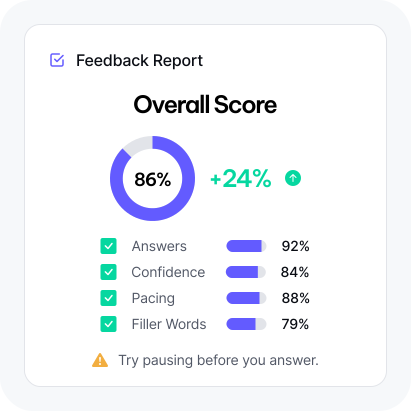
Automated feedback can identify patterns, but review the underlying example. A slower pace may be useful if it improves clarity. A longer answer may be appropriate for a complex case. Treat scores as prompts for investigation, not as verdicts about employability.
Know when another full mock will help
Add another simulation when you have applied the last feedback and need to test integration. Add one when the interview format changes, such as moving from recruiter screen to technical panel. Add one if a new job description requires a different story set or presentation.
Do not add a mock simply because anxiety returned. Ask whether a specific capability remains untested. Sometimes the better next step is sleep, logistics, company research, or preparing thoughtful questions. The preparation ideas in the complete interview practice guide can help identify those gaps.
Stop before practice becomes avoidance or scripting
Practice has reached diminishing returns when answers stop improving, you chase tiny wording changes, or every attempt sounds identical. It may also be time to stop when feedback conflicts because the core answer is already credible and reviewers are expressing personal preferences.
Schedule the final full mock 24 to 48 hours before the real interview when possible. Use the final day for a light review of story anchors, questions, and logistics. Readiness includes arriving with enough mental energy to listen.
Common mistakes to avoid
Mock interviews work poorly when they become endurance tests or reassurance rituals. Use these warning signs to keep practice connected to learning.
Repeating without a retry target: A second full interview should test a change. If you cannot name the behavior being retried, isolate the difficult question first.
Collecting broad feedback: Comments such as ‘be more confident’ are hard to use. Ask what the reviewer heard, where evidence was missing, and which next attempt would show improvement.
Changing every answer: Overhauling the entire story bank after each opinion creates instability. Protect what worked and change only the part supported by evidence.
Using one supportive interviewer: Familiar warmth can hide turn-taking and follow-up problems. Add neutral and concise styles while keeping the interaction fair.
Optimizing an overall score: A combined number can conceal progress on a harder task. Compare the actual answers, difficulty, and chosen criteria.
Scheduling the final mock too late: A difficult simulation immediately before the interview can disrupt sleep and confidence. Leave time to recover, fix logistics, and return to a light review.
A seven-day practice plan
Day 1: Run the baseline and choose two goals. Day 2: drill the weakest question in three variations. Day 3: complete mock two with a different interviewer style. Day 4: revise the story bank and practice follow-ups only.
Day 5: run mock three in the expected format and compare evidence with the baseline. Day 6: complete one optional targeted mock only if a material gap remains. Day 7: review anchors and logistics, then stop. For a longer runway, spread this plan across two weeks.
Use a simple attempt record with the date, interviewer type, target behavior, scenario difficulty, evidence observed, and next drill. This prevents broad feedback from disappearing between sessions and shows whether you are increasing difficulty before a skill is stable.
A sample progression might move from a recruiter screen to a hiring-manager conversation, then to a panel with a short case. The questions can overlap, but each format introduces a different coordination problem. Readiness means the core evidence remains available as those demands change.
If another person reviews the sessions, ask them to calibrate against the role rather than personal presentation preference. A thoughtful pause, direct style, or quiet energy can be effective. Feedback should explain how a behavior affected clarity, evidence, rapport, or decision quality.
At the end of each day, keep three short notes: what felt easier, what evidence still needs work, and the exact next practice action. Do not grade the whole session from your mood immediately afterward. Compare the relevant answer or decision with the day's goal, preserve one strength, and make one change. This record turns preparation into a sequence of usable experiments instead of a search for one perfect performance.
Frequently asked questions
Is one mock interview enough?
One is better than none and can reveal major gaps. A second attempt after focused practice is what shows whether the feedback became usable.
Can I do a mock interview every day?
Yes for a short period, but alternate full mocks with brief drills and recovery. Daily full interviews can create fatigue without better learning.
Should I use the same questions each time?
Repeat some questions to measure improvement, then vary wording and follow-ups to test flexible retrieval.
Do AI mock interviews replace human practice?
No. AI can provide availability, variation, and private repetition. A trusted human adds context, lived hiring judgment, and relational feedback.
What is the best sign that I am ready?
You can answer unfamiliar wording with relevant evidence, recover from a difficult moment, and remain engaged without relying on a script.
Count learning loops, not completed simulations
Three to six mock interviews is a useful range, but the number is not the mechanism. Improvement happens when each full attempt reveals a priority, short drills change the behavior, and a later simulation tests the change under variation.
Begin early enough to retry, choose narrow goals, compare evidence, and stop before preparation becomes performance anxiety. The final aim is not to master the mock. It is to meet the real interviewer with flexible stories, useful questions, and attention left for the conversation.
.jpeg)