

Understand what the speaking task actually demands
Build a Resso scenario that matches the task
A step-by-step practice workflow for English proficiency test selection
Review feedback in the right order
A focused 30-minute practice session
Move from coaching toward official conditions
Compare the speaking demands of IELTS, TOEFL iBT, PTE Academic, CELPIP, and the Duolingo English Test before building a test-specific practice plan.
High-stakes English tests compress several language skills into a short speaking window. You need to understand the task, retrieve useful language, organize meaning, and stay understandable while the clock and recording continue. For students, immigrants, and professionals choosing an accepted English proficiency test, progress comes from repeated, specific practice rather than from collecting model answers.
Resso language practice can provide a private place to speak, receive follow-up questions, review feedback, and retry. This guide turns that capability into a workflow for english proficiency test selection. It keeps official materials and qualified teachers in the loop because an independent practice tool cannot reproduce an official examiner, security process, or score.
Understand what the speaking task actually demands
The best test is the one accepted for your real purpose and compatible with your strengths, access needs, timeline, location, and preferred delivery mode. A popular exam is not useful if the institution, licensing body, employer, or immigration pathway does not accept it for your application.
Speaking conditions differ materially. IELTS uses a live examiner interview with three parts. The current TOEFL iBT uses Listen and Repeat plus Take an Interview. PTE Academic rotates through several microphone-based task families. CELPIP emphasizes functional everyday scenarios. The Duolingo English Test uses online tasks and interactive speaking. Cambridge exams often include interaction with another candidate.
Formats, acceptance, pricing, score validity, security rules, and availability change. Verify each decision with the receiving organization and current official test provider. Use comparisons as a planning framework, not as a substitute for eligibility confirmation.
Before building a practice routine, open the current official test information and confirm the task names, timing, instructions, scoring information, and permitted materials. Save the date you checked it. This small step prevents an old video or forum post from shaping weeks of practice.
Build a Resso scenario that matches the task
Create a Resso sampler with one original task representing each communication condition: live-style interview, exact sentence repetition, microphone-based visual description, everyday problem-solving scenario, online interactive follow-up, and partner-style collaborative choice. Use it to observe fit, not to generate predicted scores.
Use Resso's custom scenario builder to define the role, context, prompt sequence, and success criteria. Keep prompts original and representative. Do not copy secured questions, imply access to live test content, or let the practice partner explain an answer before you have attempted it.
Before the first response, complete these checks:
- List every receiving institution or authority
- Confirm accepted tests and minimum requirements directly
- Check current dates, fees, locations, equipment, and accommodations
- Separate practical fit from which sample task feels easiest
A step-by-step practice workflow for English proficiency test selection
The sequence below is specific to the communication demands of this task. Complete a clean baseline first. Then change one behavior at a time so you can tell which adjustment helped.
Step 1: Start with acceptance
Check the exact program, visa category, regulator, employer, or licensing body. Record the source and date. Do not assume that acceptance by one department or country applies to another.
Step 2: Compare speaking interaction
Decide whether you communicate better with a live examiner, a microphone, an interactive online sequence, or a partner. Preference is not the only factor, but it affects preparation and test-day comfort.
Step 3: Map task families
List what you must do with language: repeat accurately, answer personally, speak at length, describe visuals, synthesize listening, persuade, solve a problem, or collaborate. Choose preparation that matches the actual test.
Step 4: Check logistics and access
Compare authorized test locations or online requirements, dates, result timelines, identification, equipment, security rules, accommodations, and rescheduling policies through official sources.
Step 5: Run a diagnostic sampler
Try legitimate public sample tasks from the tests still under consideration. Record performance and effort without converting them into unofficial score predictions. Note which weaknesses are trainable and which constraints are practical.
Step 6: Commit and specialize
Once the acceptance and logistics decision is secure, use most practice time on the chosen format. General English development remains valuable, but task switching should no longer dominate the plan.
Keep the final attempt on a new prompt. That transfer check matters because a response can sound better simply through familiarity. For a broader routine built around real conversation, see How Students Can Use Resso for Real Conversation Practice in a New Language.
Review feedback in the right order
Evaluate fit across five columns: acceptance, logistics, speaking interaction, task demands, and preparation evidence. Add cost and accessibility based on your situation. Avoid ranking tests as universally easier. Familiarity, language profile, technology comfort, and receiving requirements change the decision.
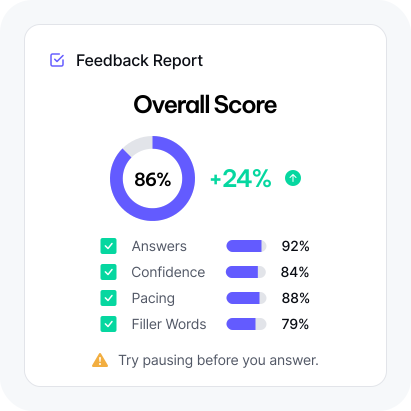
Use Resso feedback to locate a moment, not to replace your whole answer. Write a compact note in this form: evidence, likely cause, next action, transfer prompt. If the suggestion depends on an uncertain transcript, scoring interpretation, or pronunciation judgment, listen again and ask a qualified person. The related guide How to Practice for IELTS Speaking With Resso can help you place this feedback inside the wider test strategy.
A focused 30-minute practice session
A short session works when every block has a purpose. Use this sequence as a starting point, then adjust for access needs, fatigue, and your teacher's guidance:
- Ten minutes: verify acceptance and current official requirements
- Ten minutes: sample two contrasting speaking conditions with original prompts
- Five minutes: record performance, comfort, and logistical constraints separately
- Five minutes: choose the next official sample or remove an ineligible test from consideration
Stop the review after selecting one next action. Endless replay encourages self-criticism without necessarily creating better speech. On another day, use How to Practice for TOEFL iBT Speaking With Resso to work on a connected weakness without repeating the same prompt.
Common mistakes to avoid
These habits can make practice feel productive while reducing its value:
- Choosing a test before confirming acceptance
- Relying on an outdated comparison page
- Calling one test easier for every candidate
- Using unofficial score converters as guarantees
- Continuing broad comparison after a sound decision should shift practice toward specialization
The correction is not to remove personality or speak like a model recording. Keep your own experiences, accent, and reasonable speaking style. Improve whether the listener can follow the meaning and whether the response performs the requested task.
Move from coaching toward official conditions
Early practice can use captions, visible planning cues, replay, and generous preparation. Reduce those supports gradually when the official task does not provide them. Use fresh prompts, the expected recording setup, and realistic interruption rules. Maintain approved accessibility arrangements and follow the provider's current accommodation process.
Resso remains most valuable as the repetition layer around official materials and human coaching. A teacher can interpret recurring language patterns, a test provider defines the format, and an authorized test produces the result. IELTS, TOEFL iBT, PTE Academic, CELPIP, the Duolingo English Test, and Cambridge English exams belong to their respective providers. Resso is independent and not endorsed by those organizations. Always verify current official requirements.
Track progress without predicting an official score
For selection, progress means uncertainty is removed: every receiving organization is checked, logistics are documented, access needs are addressed, and a test is chosen for defensible reasons. After selection, replace the comparison sheet with task-specific measures from the relevant article in this cluster.
Compare like with like: similar task family, fresh prompt, similar preparation time, and similar equipment. Keep confidence, language performance, and technical quality in separate columns. If you want a deeper plan for applying feedback across a week, use How to Practice for PTE Academic Speaking With Resso.
Frequently asked questions
Which English test is easiest?
There is no universal answer. Acceptance comes first, then consider task fit, delivery, access, timing, cost, and your demonstrated strengths on official samples.
Can I send different tests to different institutions?
Policies differ. Check each receiving organization's current rules, deadlines, and score-reporting process before booking.
Should I prepare for two tests at once?
Only when your application strategy truly requires it. Once one accepted test is chosen, specialized practice is usually more efficient than constant format switching.
Practice the task, then transfer the skill
Effective test preparation develops language you can use when the wording, topic, or follow-up changes. Match the practice design to English proficiency test selection, complete the response before over-editing it, review evidence in a sensible order, and test every improvement on unfamiliar material.
With Resso for Education, learners and educators can build repeatable speaking scenarios while keeping official rules and human judgment authoritative. Start with one baseline, choose one high-impact change, and build enough varied repetitions for that change to survive the next question. Talk with Resso about language-practice coaching.